
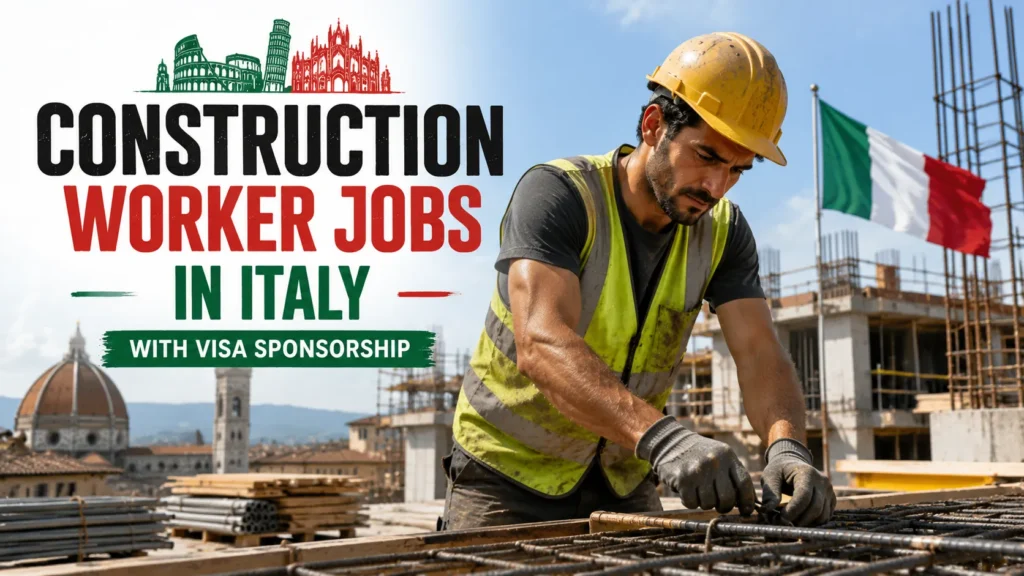
Italy’s construction industry offers employment opportunities for workers involved in building, renovation, road development, and infrastructure projects. Construction companies need general laborers and skilled workers to help complete residential buildings, commercial properties, and public facilities. Foreign applicants with practical experience may find opportunities with employers willing to recruit workers from outside the European Union.
Construction work can suit people who are physically fit, comfortable working outdoors, and able to follow safety instructions. Some entry-level positions provide on-the-job training, while skilled trades usually require relevant experience. However, finding an employer willing to hire foreign workers is only the first step. Visa sponsorship depends on the employer, the type of job, available immigration routes, and current Italian regulations.
Job Overview
- Job Title: Construction Worker
- Country: Italy
- Job Type: Full-time, temporary, or project-based
- Experience: Entry-level and experienced positions available
- Education: Basic education; technical training is useful for skilled roles
- Language: Basic Italian is helpful for workplace communication
- Visa Sponsorship: Possible through eligible employment and work authorization procedures
- Salary: Approximately €1,200 to €1,800 gross per month, depending on skills and experience
Types of Construction Worker Jobs in Italy
Construction companies recruit workers for different tasks depending on the project. Common job categories include:
- General Construction Laborer: Carries materials, prepares work areas, removes debris, and supports skilled tradespeople.
- Bricklayer: Builds walls, partitions, and other structures using bricks, blocks, and mortar.
- Carpenter: Measures, cuts, and installs timber structures, frameworks, doors, and other wooden components.
- Plasterer: Applies plaster and finishing materials to walls and ceilings.
- Painter: Prepares surfaces and applies paint or protective coatings to buildings.
- Concrete Worker: Helps mix, pour, spread, and finish concrete for foundations, floors, and other structures.
- Tile Installer: Measures surfaces and installs tiles in kitchens, bathrooms, and other areas.
- Steel Fixer: Cuts, positions, and secures reinforcing steel used in concrete structures.
Responsibilities of Construction Workers in Italy
Daily responsibilities depend on the job title and construction site. General duties may include:
- Preparing construction areas before work begins.
- Loading, unloading, and moving building materials.
- Assisting with foundations, walls, floors, and other structures.
- Using hand tools and machinery according to training.
- Measuring and cutting materials when required.
- Mixing concrete, mortar, and other construction materials.
- Keeping work areas organized and removing waste.
- Following instructions from site supervisors and skilled tradespeople.
- Wearing protective equipment and following workplace safety procedures.
- Reporting damaged tools, unsafe conditions, or project delays.
Workers in specialized positions may also be responsible for reading technical drawings, checking measurements, and completing detailed installation work.
Benefits of Construction Worker Jobs in Italy
Working in Italy’s construction sector can offer several advantages to foreign applicants.
- Employment Opportunities: Building and renovation projects create demand for workers with different skill levels.
- Skilled and Entry-Level Roles: Applicants can search for general labor positions or jobs matching their trade experience.
- Practical Experience: Workers can improve their construction skills and learn professional building methods.
- Regular Income: Full-time employment may provide a stable salary under a written contract.
- Career Development: Experienced workers may progress to specialized trades or supervisory positions.
- Workplace Protection: Employees with proper contracts are entitled to applicable employment protections and safety measures.
- Accommodation Possibilities: Some employers may help workers arrange housing, although this is not guaranteed.
Also Check: Farm Worker Jobs in Italy with Visa Sponsorship 2026
Requirements for Construction Worker Jobs in Italy
Employers usually look for dependable workers who can perform their assigned duties safely and efficiently. Common requirements include:
- A valid passport and documents required for the work visa process.
- Previous construction experience for positions involving skilled tasks.
- Basic knowledge of construction tools, materials, and equipment.
- Physical fitness for lifting, standing, bending, and working on active sites.
- Ability to follow safety instructions and communicate with supervisors.
- Basic Italian language skills, which can improve workplace communication.
- Relevant technical certificates or vocational training for specialized roles.
- Willingness to work according to project schedules and site requirements.
Some employers may require additional safety training or proof of trade qualifications before allowing workers to perform specific tasks.
Salary of Construction Workers in Italy
Construction salaries vary according to experience, location, trade, working hours, and the applicable collective labour agreement. As an indicative estimate, general construction workers may earn around €1,200 to €1,500 gross per month, while experienced tradespeople may earn approximately €1,500 to €1,800 or more.
These figures are estimates rather than guaranteed rates. Applicants should check whether the offer is based on hourly or monthly pay and confirm overtime, holiday allowances, accommodation costs, and deductions. The written contract should explain the applicable wage classification and employment conditions.
Visa Sponsorship for Construction Worker Jobs in Italy
Non-EU citizens generally need an appropriate work authorization to take up employment in Italy. Some construction vacancies may be filled through the regular employed-worker immigration route, subject to the applicable rules and any required quota or labour-market conditions. Applicants should not assume that every construction job qualifies for sponsorship.
The process usually involves:
- Find an Eligible Employer: Apply to construction companies and contractors that are prepared to recruit foreign workers.
- Receive a Job Offer: The employer should provide a written offer or employment contract with details of the role and salary.
- Employer Requests Authorization: Where required, the employer applies for a Nulla Osta through the relevant Italian authorities.
- Submit a Visa Application: Once authorization is approved, the applicant follows the appropriate visa process through the Italian consulate.
- Complete Arrival Formalities: After arriving in Italy, the worker must complete the required residence permit procedures within the applicable timeframe.
Visa approval depends on the applicant’s eligibility and the relevant immigration rules. Check the Italian Ministry of Labour and the EU Immigration Portal’s employed worker guide for Italy for official information.
How to Apply for Construction Worker Jobs in Italy
Follow these steps to find vacancies and apply for suitable positions.
- Prepare Your CV: List your construction experience, trade skills, training, and previous employers.
- Search for Vacancies: Check Italian job portals, construction company websites, and international recruitment platforms.
- Check Visa Support: Ask employers whether they can legally recruit non-EU workers and support the required authorization process.
- Submit Your Application: Send your CV and relevant certificates or work references.
- Attend an Interview: Be ready to discuss your skills, availability, and experience with construction tools and equipment.
- Review the Job Offer: Confirm salary, working hours, accommodation, contract duration, and safety arrangements.
- Complete the Visa Process: Follow the official instructions and provide all documents requested by the relevant authorities.
- Click Apply Now to get started.
Final Thoughts
Construction worker jobs in Italy can offer opportunities for foreign applicants with practical skills and a willingness to work on building projects. General laborers and experienced tradespeople can explore vacancies with contractors and construction companies across the country. Prepare a strong CV, verify the employer, and understand the work authorization process before accepting an offer. A genuine contract and approved immigration documents are essential before starting employment.