
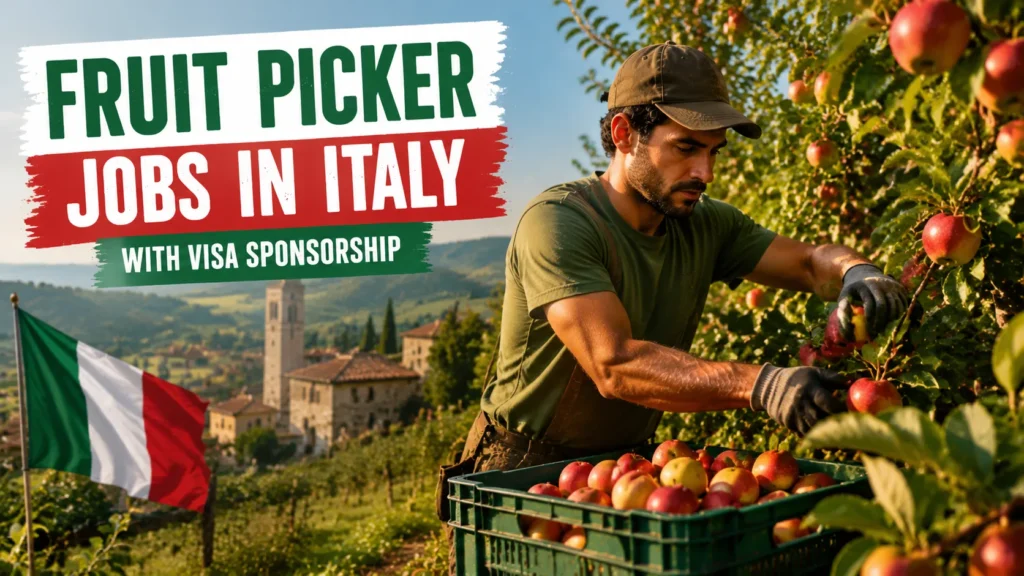
Italy has a large agricultural industry that produces grapes, apples, oranges, peaches, strawberries, olives, and other crops. Farms across the country need seasonal workers to help with harvesting, sorting, packing, and preparing fresh produce for transport. This creates opportunities for foreign applicants interested in fruit picker jobs, particularly during busy harvesting periods.
Fruit picking is generally physical work that takes place outdoors, often in orchards, vineyards, and fields. Many positions do not require advanced education or previous agricultural experience because employers may provide basic training. Some Italian farms recruit workers from outside the European Union through legal seasonal employment procedures. However, visa sponsorship depends on the employer, available quotas, and current immigration rules. A job offer alone does not guarantee a visa.
Job Overview
- Job Title: Fruit Picker
- Country: Italy
- Job Type: Seasonal or temporary, with some longer-term agricultural opportunities
- Experience: Previous farm experience is helpful but not always required
- Education: No advanced degree usually required
- Language: Basic Italian is useful; some employers may accept English
- Visa Sponsorship: Possible through eligible seasonal work arrangements
- Salary: Approximately €1,000 to €1,500 gross per month, depending on hours, region, and crop
Types of Fruit Picker Jobs in Italy
Italy grows different fruits across its regions, so harvesting work varies throughout the year. Common job opportunities include:
- Apple Picker: Harvests apples in orchards, selects ripe fruit, and places it carefully into collection containers.
- Grape Picker: Works in vineyards during the grape harvest, cutting bunches and preparing them for collection.
- Orange Picker: Collects ripe oranges and other citrus fruits from trees, particularly in southern Italy.
- Strawberry Picker: Harvests strawberries by hand and sorts them according to quality and size.
- Peach Picker: Collects ripe peaches and handles them carefully to prevent bruising.
- Cherry Picker: Harvests cherries during their short picking season and sorts the fruit for packing.
- Olive Harvester: Helps collect olives during the harvesting season using manual tools or approved equipment.
Responsibilities of Fruit Pickers in Italy
Fruit pickers perform several tasks to help farms complete their harvesting schedules. Their responsibilities may include:
- Picking ripe fruit by hand or using suitable harvesting tools.
- Checking fruit for damage, ripeness, and quality.
- Placing harvested produce into baskets, crates, or containers.
- Sorting fruits according to size, condition, and market requirements.
- Removing damaged or unsuitable produce.
- Carrying collected fruit to designated storage or collection points.
- Helping with basic packing and preparation for transportation.
- Keeping harvesting tools and work areas clean.
- Following instructions from farm supervisors.
- Observing safety rules while working outdoors and handling equipment.
Workers may also need to stand, walk, bend, and carry containers for several hours. The exact workload depends on the crop and farm.
Benefits of Fruit Picker Jobs in Italy
Seasonal agricultural work can offer practical advantages for people looking for employment abroad.
- Entry-Level Opportunities: Many farms accept applicants without formal agricultural qualifications.
- Seasonal Employment: Harvesting periods create temporary vacancies in different parts of Italy.
- Practical Training: Workers can learn harvesting techniques and basic crop-handling skills on the job.
- Accommodation Options: Some farms may provide shared accommodation or help workers find housing. Always confirm whether it is free or deducted from wages.
- Overtime Opportunities: During busy harvesting periods, additional hours may be available where permitted by the contract and labour rules.
- International Experience: Workers can gain experience in agriculture and learn about Italian farming practices.
- Different Crop Seasons: Depending on the region and time of year, applicants may find work with different types of fruit.
Also Check: Waiter Jobs in Italy with Visa Sponsorship 2026
Requirements for Fruit Picker Jobs in Italy
Employers usually look for reliable workers who can handle physical tasks and follow farm instructions. Common requirements include:
- A valid passport and documents needed for the seasonal work visa.
- Good physical fitness for outdoor and repetitive work.
- Ability to stand, bend, walk, and carry harvested produce.
- Willingness to work in different weather conditions.
- Basic communication skills in Italian or English, depending on the employer.
- Previous farm or harvesting experience, which can be an advantage.
- Ability to follow instructions and work as part of a team.
- Punctuality, patience, and attention to fruit quality.
Some farms provide training and basic equipment, but applicants should confirm what they need to bring before starting.
Salary of Fruit Pickers in Italy
Fruit picker salaries depend on the crop, region, employer, working hours, and applicable agricultural employment agreement. As an indicative estimate, seasonal workers may earn around €1,000 to €1,500 gross per month when working full-time. Some employers pay by the hour or according to the amount of fruit collected, subject to applicable wage rules.
Workers should check the contract for the hourly or daily rate, expected working hours, overtime arrangements, rest days, and accommodation costs. Harvesting work can be affected by weather and crop availability, so the number of working days may vary. The estimated salary is not a guaranteed amount.
Visa Sponsorship for Fruit Picker Jobs in Italy
Italy allows eligible foreign workers to enter the country for seasonal agricultural employment through its immigration quota system, known as Decreto Flussi. Agricultural employers can recruit non-EU workers when the relevant conditions and available quotas permit.
The process generally involves:
- Find a Farm Employer: Apply to farms, agricultural businesses, and recruitment agencies hiring seasonal workers.
- Receive a Job Offer: Confirm the crop, work location, contract duration, salary, and accommodation arrangements.
- Employer Requests Authorization: The employer applies for the required work authorization, known as Nulla Osta, through the relevant Italian authorities.
- Apply for a Seasonal Work Visa: After authorization is issued, the applicant submits the visa application through the appropriate Italian consulate.
- Complete Arrival Formalities: After entering Italy, the worker must follow the required residence permit procedures within the applicable deadline.
Not every farm can sponsor foreign workers, and applications depend on the current quota rules. Read the Italian Ministry of Labour’s information on the 2026–2028 Decreto Flussi and the EU Immigration Portal’s seasonal worker guide for Italy before applying.
How to Apply for Fruit Picker Jobs in Italy
Follow these steps to find seasonal agricultural vacancies and submit your application.
- Prepare Your CV: Include your personal details, previous work experience, physical skills, and language abilities.
- Search for Farm Vacancies: Check agricultural recruitment websites, farm job portals, and seasonal employment listings.
- Contact Employers: Ask whether they recruit non-EU applicants and can complete the seasonal work authorization process.
- Submit Your Application: Send your CV and any requested documents to the employer or recruitment agency.
- Attend an Interview: Explain your availability, previous experience, and willingness to perform outdoor harvesting work.
- Check the Contract: Review the salary, working hours, accommodation, transport, and contract duration before accepting.
- Complete Visa Formalities: Follow the official instructions after the employer obtains the required authorization.
- Click Apply Now to get started.
Final Thoughts
Fruit picker jobs in Italy can offer seasonal employment opportunities for foreign workers who are comfortable with physical outdoor work. Farms need extra help during different harvesting periods, although vacancies depend on crop schedules and regional demand. Prepare your CV early, contact genuine employers, and confirm visa arrangements before making travel plans. Always check the employment contract and official immigration requirements before accepting a position.