
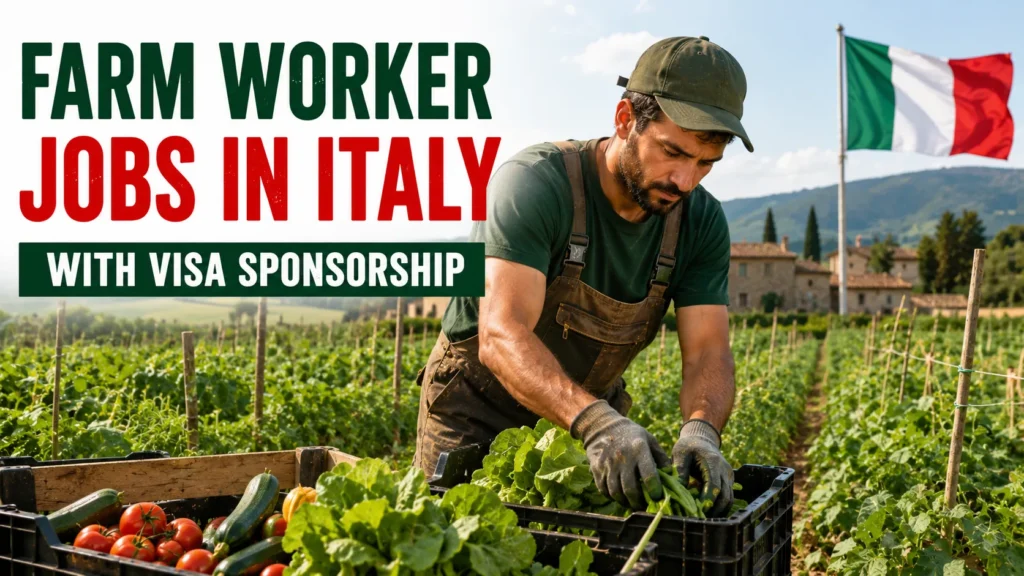
Italy has a large agricultural sector that produces fruits, vegetables, olives, grapes, and other crops for local consumption and international markets. Farms across regions such as Sicily, Puglia, Tuscany, and Emilia-Romagna need workers for planting, harvesting, sorting, and packing agricultural products. During busy farming seasons, employers often recruit additional staff to manage their workloads.
For foreign applicants, farm worker jobs can provide an opportunity to earn money while gaining experience in Italy’s agricultural industry. Some Italian farms and agricultural companies recruit workers from outside the European Union through government-approved employment procedures. However, visa sponsorship is not guaranteed. Applicants need a genuine job offer and must meet the relevant immigration requirements before travelling to Italy.
Job Overview
Farm workers perform practical tasks in fields, orchards, vineyards, greenhouses, and agricultural packing facilities. The work may be seasonal or available throughout the year, depending on the employer and type of farming activity.
Here are the general details of these positions:
- Job Title: Farm Worker / Agricultural Worker
- Country: Italy
- Job Type: Seasonal, temporary, or full-time
- Experience: Previous farm experience is helpful but not always necessary
- Education: Basic education is generally sufficient
- Language: Basic Italian is useful
- Visa: Employer-supported work authorization, subject to eligibility
- Salary: Depends on the region, crop, contract, and working hours
Types of Farm Worker Jobs in Italy
Italian farms offer different roles throughout the agricultural production process. Applicants can look for positions that match their physical abilities and previous experience.
- Fruit Picker: Collects ripe apples, oranges, peaches, grapes, and other fruits without damaging the produce.
- Vegetable Farm Worker: Plants, waters, maintains, and harvests vegetables in open fields and greenhouses.
- Vineyard Worker: Helps maintain grapevines through pruning, tying, weed removal, and grape harvesting.
- Olive Farm Worker: Maintains olive trees and collects olives during the harvesting season.
- Greenhouse Worker: Supports the production of tomatoes, peppers, cucumbers, and other crops in controlled environments.
- Farm Packing Worker: Sorts, weighs, labels, and packs agricultural products for transport and sale.
- General Farm Assistant: Performs various duties, including cleaning farm areas, preparing soil, and maintaining tools.
Responsibilities of Farm Workers in Italy
Daily responsibilities depend on the farm, crop, and assigned position. Most jobs involve physical activities and following instructions from supervisors.
Common duties include:
- Preparing fields and soil before planting.
- Planting seeds, seedlings, and young plants.
- Watering crops and assisting with irrigation systems.
- Removing weeds and damaged plant material.
- Picking fruits and vegetables at the correct stage of maturity.
- Sorting produce according to size, quality, and condition.
- Packing harvested products into boxes and containers.
- Loading and unloading agricultural supplies.
- Cleaning tools, equipment, and storage areas.
- Following safety instructions when handling machinery and farm chemicals.
- Reporting damaged crops and equipment problems to supervisors.
Benefits of Farm Worker Jobs in Italy
Agricultural employment can provide practical experience and an opportunity to work in one of Europe’s major farming industries. Benefits vary between employers and depend on the employment contract.
Possible benefits include:
- Regular Wages: Employees receive payment according to their agreed contracts and applicable employment rules.
- Accommodation Support: Some farms provide shared housing or help workers arrange accommodation.
- Paid Leave: Eligible employees receive leave according to Italian employment law and the applicable collective agreement.
- Social Security: Properly registered employees receive coverage under the Italian social security system.
- Seasonal Opportunities: Farms recruit additional workers during planting and harvesting periods.
- Practical Skills: Employees gain experience in crop production, harvesting, and agricultural equipment.
- Overtime Opportunities: Some employers offer additional working hours during busy periods, subject to legal limits.
- Future Employment: Workers with good performance may be considered for future seasonal contracts.
Also Check: Greenhouse Worker Jobs in Spain with Visa Sponsorship 2026
Requirements for Farm Worker Jobs in Italy
Many basic agricultural positions do not require university education or advanced professional qualifications. However, employers expect applicants to be physically fit, dependable, and willing to work outdoors.
Common requirements include:
- A valid passport and eligibility to apply for an Italian work visa.
- Good physical health and the ability to perform manual tasks.
- Willingness to work in different weather conditions.
- Ability to stand, walk, bend, and lift agricultural products.
- Basic communication skills in Italian or a language understood by the supervisor.
- Previous farm experience, if requested.
- Availability for early shifts and seasonal schedules.
- Ability to follow hygiene and workplace safety instructions.
- Relevant training for jobs involving machinery or specialized equipment.
Applicants without agricultural experience can look for general farm assistant, fruit-picking, and vegetable-harvesting positions.
Salary of Farm Workers in Italy
Farm worker salaries depend on the region, employer, crop, experience, and working hours. As an indicative estimate, full-time agricultural workers may earn around €1,000 to €1,500 gross per month. Experienced workers and employees operating agricultural machinery may receive higher pay.
Agricultural wages in Italy are influenced by provincial and national collective labour agreements. Some employers pay workers by the hour or day rather than offering a fixed monthly salary. The actual amount may also depend on the number of working days in a season.
Before accepting an offer, confirm whether the advertised salary is gross or net. Ask about working hours, overtime, accommodation, meals, transport, and any deductions. Make sure all payment arrangements are included in the employment contract.
Visa Sponsorship for Farm Worker Jobs in Italy
Non-EU citizens generally need an employer-sponsored work authorization and the appropriate visa before starting agricultural employment in Italy. Seasonal farm recruitment is commonly handled through the government’s Decreto Flussi immigration system, which sets annual entry quotas.
Important points include:
- Job Offer: You need a genuine employment offer from an Italian agricultural employer.
- Nulla Osta: The employer generally applies for a work authorization, known as the Nulla Osta, through the relevant immigration office.
- Decreto Flussi: Seasonal agricultural recruitment may fall under the annual government quota system.
- Visa Application: After authorization is approved, the applicant applies for the relevant work visa at the Italian consulate.
- Residence Permit: After arriving in Italy, workers must complete the required residence permit procedure within the applicable timeframe.
- Contract Conditions: Check the employment period, salary, accommodation, and other arrangements before accepting the offer.
How to Apply for Farm Worker Jobs in Italy
Follow these steps to find suitable agricultural vacancies:
- Prepare Your CV: Include your personal details, previous work experience, physical work skills, and language abilities.
- Search for Vacancies: Look for fruit-picking, greenhouse, vineyard, vegetable-farming, and general agricultural positions.
- Find Genuine Employers: Contact established farms, agricultural companies, and recognized recruitment agencies.
- Confirm Visa Sponsorship: Ask whether the employer can recruit non-EU workers and apply for the required authorization.
- Submit Your Documents: Send your CV and requested documents through the employer’s official recruitment channel.
- Attend an Interview: Explain your experience, availability, and willingness to perform farm duties.
- Review the Contract: Check the salary, working hours, employment period, accommodation, and visa arrangements.
- Complete the Visa Process: Follow the instructions from your employer and the Italian consulate.
- Click Apply Now to get started.
Final Thoughts
Farm worker jobs in Italy can provide opportunities for foreign applicants interested in agriculture and seasonal employment. Basic positions may be accessible without advanced qualifications, although physical fitness, reliability, and willingness to learn are important. Focus on genuine employers, check the available work authorization quotas, and review your contract carefully before making travel arrangements.
1 thought on “Farm Worker Jobs in Italy with Visa Sponsorship 2026”