
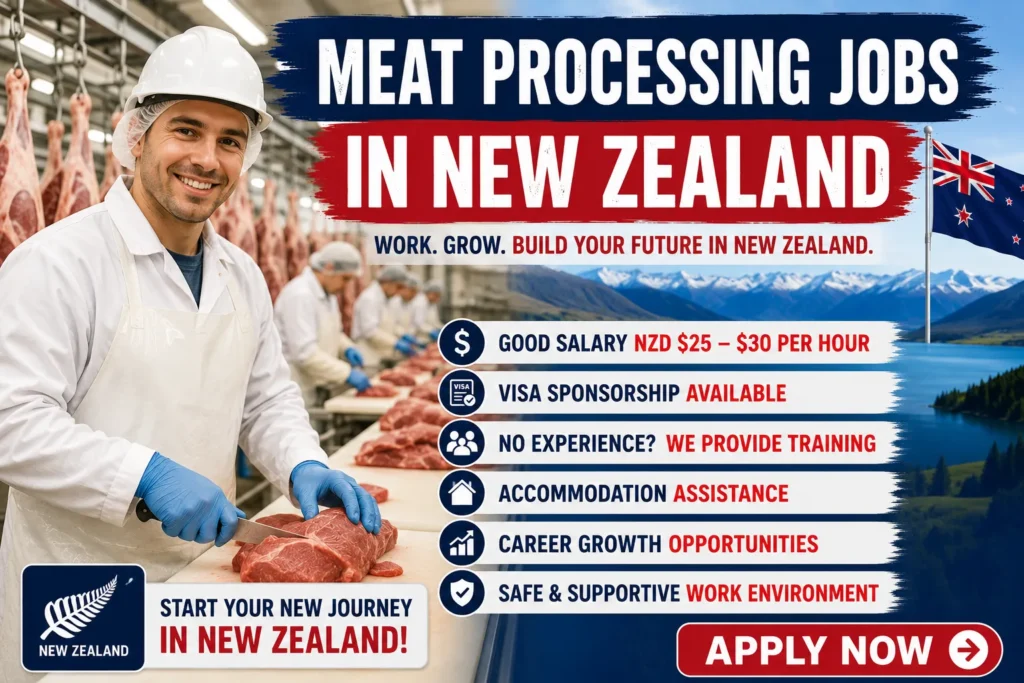
New Zealand is one of the world’s leading exporters of beef, lamb, and venison, creating strong demand for skilled and reliable workers in the meat processing industry. Meat Processing Jobs in New Zealand with Visa Sponsorship 2026 provide excellent opportunities for international candidates seeking stable employment, competitive salaries, and valuable overseas work experience.
Many meat processing companies recruit overseas workers to address labor shortages, particularly during peak production seasons. Eligible candidates may receive visa sponsorship, along with attractive employee benefits, training opportunities, and long-term career prospects.
In this guide, you’ll learn everything about meat processing jobs in New Zealand, including salary expectations, responsibilities, qualifications, benefits, visa sponsorship opportunities, and how to apply successfully.
Why Meat Processing Workers Are in High Demand in New Zealand
New Zealand’s meat industry plays a vital role in the country’s economy, supplying premium meat products to domestic and international markets. Large processing plants operate throughout the year, with increased hiring during peak livestock seasons.
As demand for skilled workers continues to grow, many employers recruit international candidates to fill essential production and processing roles.
Job Details
| Job Title | Meat Processing Worker |
|---|---|
| Country | New Zealand |
| Job Type | Full-Time / Seasonal |
| Experience Required | Preferred but Not Always Required |
| Education | High School Diploma or Equivalent |
| Visa Sponsorship | Available for Eligible Candidates |
| Salary | NZD 24 – NZD 35 Per Hour |
| Hiring Industries | Meat Processing Plants, Food Manufacturing, Export Companies |
Also Check: Bookkeeper Jobs in Australia with Visa Sponsorship 2026
Job Responsibilities
Meat processing workers perform a variety of tasks to ensure meat products are prepared safely and efficiently.
Typical responsibilities include:
- Cutting, trimming, and preparing meat products
- Deboning beef, lamb, and other livestock
- Operating meat processing machinery
- Packing and labeling meat products
- Inspecting products for quality standards
- Maintaining hygiene and food safety procedures
- Cleaning equipment and workstations
- Sorting products for distribution
- Loading and unloading meat products
- Following workplace health and safety regulations
- Assisting with inventory and stock management
- Working efficiently as part of a production team
Average Salary
Salaries vary depending on experience, employer, and job responsibilities.
Typical earnings include:
- Entry-Level Worker: NZD 24–27 per hour
- Experienced Meat Processing Worker: NZD 27–32 per hour
- Skilled Butcher or Boner: NZD 32–35+ per hour
Many employers also provide:
- Overtime pay
- Shift allowances
- Paid annual leave
- KiwiSaver retirement contributions
- Performance bonuses
- Training and career development
- Relocation support for selected positions
Benefits of Working in New Zealand
Working in New Zealand’s meat processing industry offers several advantages, including:
- Competitive hourly wages
- Employer-sponsored visa opportunities
- Paid annual leave
- Paid public holidays
- KiwiSaver retirement contributions
- Overtime earning opportunities
- Stable full-time employment
- Modern processing facilities
- On-the-job training
- Career advancement opportunities
- Potential pathway to long-term employment
Types of Meat Processing Jobs
Employers hire workers for a variety of positions, including:
- Meat Processing Worker
- Boner
- Slicer
- Trimmer
- Slaughter Floor Worker
- Packing Operator
- Production Worker
- Quality Control Assistant
- Meat Cutter
- Abattoir Worker
- Machine Operator
- Cold Storage Worker
Skills Employers Look For
Successful candidates usually possess:
- Knife handling skills
- Attention to detail
- Physical fitness
- Ability to work in cold environments
- Teamwork skills
- Good communication abilities
- Time management
- Reliability and punctuality
- Knowledge of food safety practices
- Ability to follow instructions accurately
Education and Qualification Requirements
Most employers prefer applicants who have:
- High school education or equivalent
- Previous meat processing or food production experience (preferred)
- Basic English communication skills
- Valid passport
- Good physical health
- Willingness to work flexible shifts
Many entry-level positions provide comprehensive on-the-job training.
Visa Sponsorship Opportunities
Some New Zealand meat processing companies sponsor overseas workers when they cannot find enough local employees. Visa sponsorship is generally offered to eligible candidates with relevant experience, practical skills, and a strong work ethic.
The availability of sponsorship depends on the employer’s recruitment needs, immigration requirements, and the applicant’s qualifications.
Industries Hiring Meat Processing Workers
Qualified workers are employed across several industries, including:
- Meat processing companies
- Food manufacturing plants
- Export meat companies
- Livestock processing facilities
- Cold storage warehouses
- Wholesale food suppliers
- Agricultural businesses
- Packaging and distribution companies
Best Locations for Meat Processing Jobs
Employment opportunities are available throughout New Zealand, particularly in:
- Auckland
- Hamilton
- Hastings
- Palmerston North
- Napier
- Christchurch
- Timaru
- Invercargill
- Dunedin
- Whanganui
Many meat processing plants are located in regional areas close to farming communities.
Documents Required
Before applying, prepare the following documents:
- Updated New Zealand-style Resume (CV)
- Valid Passport
- Educational Certificates
- Employment Experience Certificates (if available)
- Professional References
- Passport-size Photographs
- English Language Test Results (if required)
How to Apply?
Follow these steps to apply for meat processing jobs in New Zealand:
- Prepare a professional New Zealand-style resume.
- Gather your educational and employment documents.
- Search for employers offering visa sponsorship opportunities.
- Submit online applications through trusted job portals or employer websites.
- Attend interviews if shortlisted.
- Complete any required skills assessments or medical examinations.
- Receive a formal job offer.
- Begin the employer-supported visa application process.
- Relocate to New Zealand after your visa is approved.