
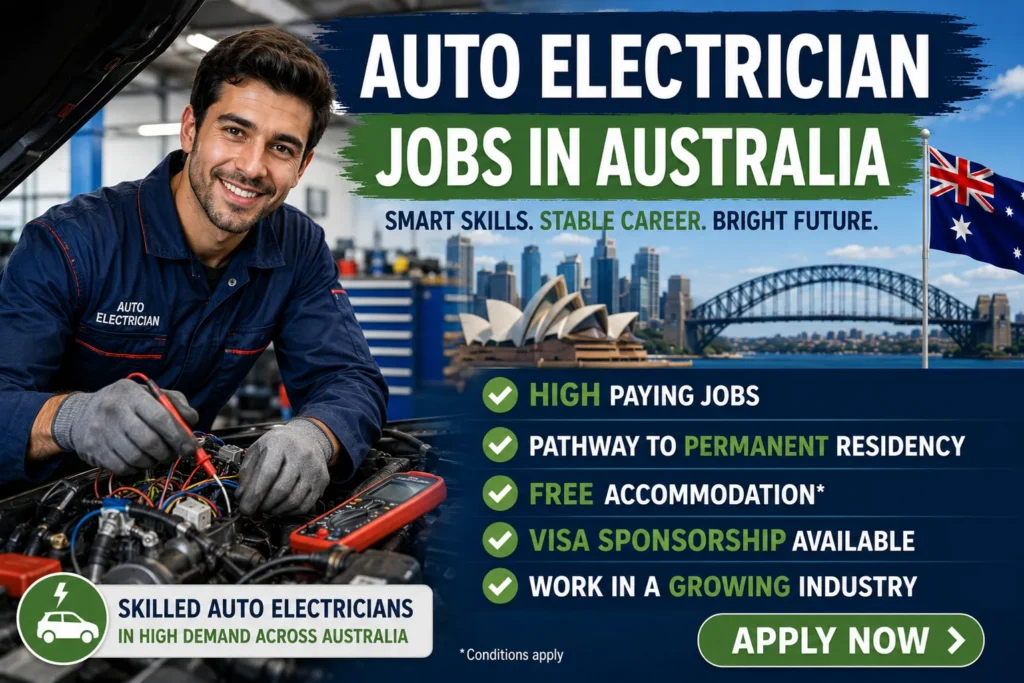
Australia continues to be one of the top destinations for skilled automotive professionals, and Auto Electrician Jobs in Australia with Visa Sponsorship 2026 are in high demand across the country. As Australia’s mining, transportation, construction, and automotive industries continue to grow, employers are actively looking for experienced auto electricians to fill skill shortages.
Many companies are willing to sponsor qualified international candidates under employer-sponsored visa programs, making this an excellent opportunity for skilled workers seeking a better career and higher income.
In this guide, you’ll learn everything you need to know about auto electrician jobs in Australia, including salaries, visa sponsorship, job responsibilities, qualifications, benefits, and how to apply.
Why Australia Needs Auto Electricians in 2026
Australia is facing an ongoing shortage of qualified tradespeople, especially in automotive electrical services. Heavy machinery, mining equipment, trucks, buses, agricultural vehicles, and passenger cars all require skilled professionals capable of diagnosing and repairing electrical systems.
Due to this shortage, many employers are recruiting overseas workers and offering visa sponsorship for suitable candidates. Hundreds of relevant vacancies are regularly listed on major Australian job platforms.
Job Details
| Job Title | Auto Electrician |
|---|---|
| Country | Australia |
| Job Type | Full-Time |
| Experience Required | 2–5 Years Preferred |
| Education | Trade Qualification or Equivalent |
| Visa Sponsorship | Available for Eligible Candidates |
| Salary | AUD 80,000 – AUD 130,000 Per Year |
| Hiring Companies | Automotive Workshops, Mining Companies, Transport Companies, Fleet Maintenance Providers |
Also Check: Landscaper Jobs in Australia with Visa Sponsorship 2026
What Does an Auto Electrician Do?
An auto electrician specializes in installing, maintaining, diagnosing, and repairing electrical systems in vehicles and heavy machinery.
Common responsibilities include:
- Diagnosing electrical faults
- Repairing vehicle wiring systems
- Installing GPS tracking systems
- Repairing alternators and starter motors
- Servicing batteries
- Installing reversing cameras
- Repairing lighting systems
- Diagnosing ECU and electronic control systems
- Working on mining equipment and heavy vehicles
- Performing preventive maintenance
- Completing service reports
Average Salary
Auto electricians earn competitive salaries in Australia.
Typical annual salary ranges include:
- Entry-Level: AUD 80,000–95,000
- Experienced: AUD 95,000–110,000
- Mining Industry: AUD 120,000–150,000+
- FIFO (Fly-In Fly-Out): Higher earning potential with additional allowances
Many positions also include:
- Overtime pay
- Performance bonuses
- Superannuation
- Accommodation assistance
- Relocation support
Actual pay varies depending on experience, employer, location, and industry. Advertised roles commonly range from around AUD 50–90+ per hour for experienced specialists.
Benefits of Visa Sponsorship Jobs
Working in Australia offers numerous advantages beyond a competitive salary.
Some common benefits include:
- Employer-sponsored work visa
- High annual salary
- Paid annual leave
- Paid sick leave
- Superannuation contributions
- Overtime opportunities
- Relocation assistance
- Career development programs
- Permanent employment opportunities
- Family sponsorship options (where eligible)
- Modern work environments
- Excellent work-life balance
Types of Auto Electrician Jobs
Qualified professionals may work in various industries, including:
- Heavy Vehicle Auto Electrician
- Mining Equipment Auto Electrician
- Agricultural Machinery Electrician
- Diesel Equipment Electrician
- Fleet Maintenance Electrician
- Automotive Service Technician
- Mobile Auto Electrician
- Bus and Coach Electrician
- Truck Auto Electrician
- Construction Equipment Electrician
- Marine Auto Electrician
- Workshop Auto Electrician
Skills Employers Look For
Australian employers typically seek candidates with:
- Strong diagnostic skills
- Knowledge of electrical circuits
- CAN Bus system experience
- ECU programming knowledge
- Battery management expertise
- Air conditioning experience (preferred)
- Heavy vehicle experience
- Ability to read wiring diagrams
- Problem-solving skills
- Good communication skills
- Attention to detail
- Teamwork
Education and Qualification Requirements
Most employers prefer applicants who have:
- Trade qualification in Automotive Electrical Technology
- Relevant work experience
- English language proficiency
- Valid passport
- Clean employment record
- Ability to meet Australian licensing or trade assessment requirements (if applicable)
Visa Sponsorship Options
Many Australian employers sponsor overseas workers through employer-sponsored visa pathways when local talent is unavailable.
Common sponsorship pathways include:
- Temporary Skill Shortage (Subclass 482)
- Employer Nomination Scheme (Subclass 186)
- Regional employer-sponsored programs
Eligibility depends on your qualifications, work experience, English ability, and the sponsoring employer.
Industries Hiring Auto Electricians
Demand is particularly strong in:
- Mining
- Construction
- Transportation
- Logistics
- Agriculture
- Manufacturing
- Automotive dealerships
- Heavy equipment maintenance
- Public transport
- Fleet management
Australian Cities Offering the Most Jobs
Some of the best locations include:
- Perth
- Brisbane
- Sydney
- Melbourne
- Adelaide
- Darwin
- Townsville
- Newcastle
- Kalgoorlie
- Mackay
Mining regions often offer the highest salaries due to remote work conditions.
Documents Required
Prepare the following before applying:
- Updated CV
- Passport
- Educational certificates
- Trade certificates
- Experience letters
- English language test (if required)
- References
- Driving licence (if applicable)
How to Apply?
Follow these simple steps:
- Prepare a professional Australian-style resume.
- Gather all educational and experience documents.
- Search for employers offering visa sponsorship.
- Submit online applications
- Attend online interviews.
- Complete any required skills assessments.
- Receive a job offer.
- Begin the employer-sponsored visa process.
- Travel to Australia after visa approval.