
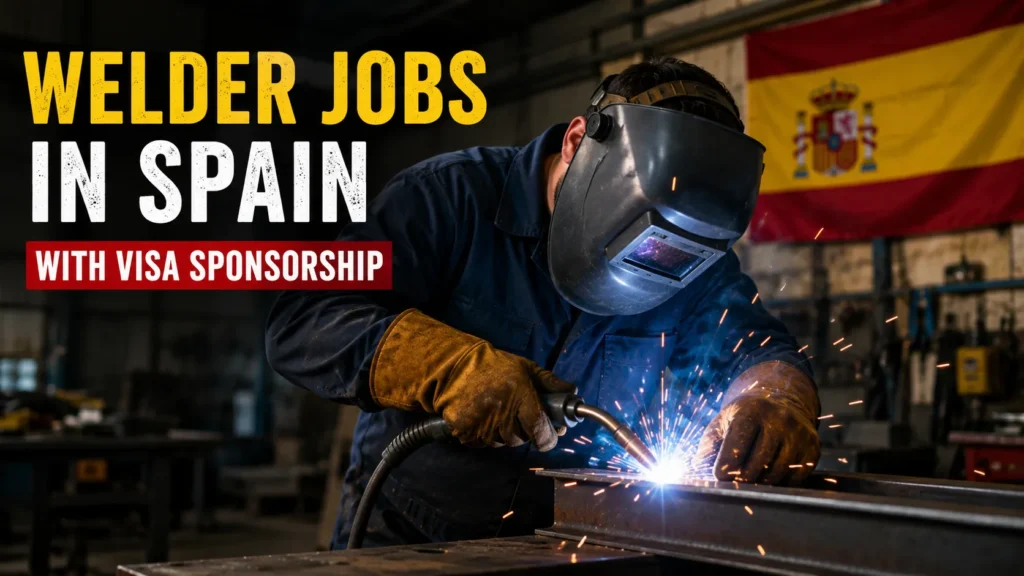
Spain has employment opportunities for skilled welders in construction, manufacturing, shipbuilding, automotive production, and industrial maintenance. Companies in these sectors need workers who can join metal components, repair structures, and manufacture products according to technical specifications. Experienced welders are particularly useful for projects that require accurate work and knowledge of different welding methods.
For foreign applicants, welder jobs can provide an opportunity to use existing technical skills while working in Spain. Some employers may consider candidates from outside the European Union and support their work authorization. However, not every vacancy offers visa sponsorship. Applicants must find an employer willing to recruit internationally and meet the country’s employment and immigration requirements.
Job Overview
Welders use specialized tools and equipment to join metal parts. They work in workshops, factories, construction sites, shipyards, and industrial facilities. Their duties depend on the materials, equipment, and welding methods used by the employer.
Here are the general details of these positions:
- Job Title: Welder / Welding Technician
- Country: Spain
- Job Type: Full-time, permanent, or contract-based
- Experience: Usually 1–3 years for skilled positions
- Education: Technical training or a welding certificate may be required
- Language: Basic Spanish is useful
- Visa: Employer-supported work authorization, subject to eligibility
- Salary: Depends on experience, welding method, industry, and location
Types of Welder Jobs in Spain
Spanish employers recruit welders for different industrial and construction activities. The required skills depend on the materials and projects involved.
- MIG Welder: Uses metal inert gas welding equipment to join metal components. These workers are commonly needed in manufacturing and fabrication workshops.
- TIG Welder: Performs precise welding on materials such as stainless steel and aluminum. This method is often used for detailed industrial work.
- MMA or Stick Welder: Uses coated electrodes to join metal parts, including work on construction sites and repair projects.
- Pipe Welder: Joins metal pipes used in industrial plants, heating systems, and other installations.
- Structural Welder: Works on metal frames, beams, supports, and other structures used in construction.
- Industrial Maintenance Welder: Repairs damaged machinery, metal components, and equipment in factories.
- Shipyard Welder: Works on ships, marine equipment, and metal structures used in the maritime industry.
Also Check: Delivery Driver Jobs in Poland with Visa Sponsorship 2026
Responsibilities of Welders in Spain
Welders must understand technical instructions and complete their work safely. Their daily responsibilities depend on the project and the welding process.
Common duties include:
- Reading technical drawings, welding symbols, and project instructions.
- Measuring and cutting metal pieces according to required dimensions.
- Preparing metal surfaces before welding.
- Selecting suitable welding equipment and materials.
- Joining metal components using the assigned welding method.
- Inspecting finished welds for cracks, gaps, and other defects.
- Operating welding machines and related workshop equipment.
- Maintaining tools and reporting equipment problems.
- Following workplace safety rules and wearing protective equipment.
- Working with engineers, fabricators, and other technicians to complete projects.
Benefits of Welder Jobs in Spain
Welding can offer long-term career opportunities for workers with the right technical skills. Employment benefits depend on the company, industry, and contract.
Possible benefits include:
- Competitive Earnings: Skilled welders may receive higher wages than basic entry-level workers, depending on their experience.
- Regular Employment: Manufacturing and industrial companies may offer stable, year-round positions.
- Paid Annual Leave: Eligible employees receive paid leave under Spanish employment law.
- Social Security: Properly registered workers receive coverage under the applicable Spanish social security system.
- Overtime Opportunities: Some employers offer additional hours when projects require them, subject to legal limits.
- Technical Development: Workers can improve their knowledge of welding processes, materials, and industrial equipment.
- Career Progression: Experienced welders may advance to welding inspectors, team leaders, or workshop supervisors with suitable qualifications.
- Different Industries: Applicants can explore opportunities in construction, automotive manufacturing, shipbuilding, and metal fabrication.
Requirements for Welder Jobs in Spain
Employers usually prefer candidates who understand welding techniques and can produce accurate, reliable work. Requirements vary according to the position and industry.
Common requirements include:
- A valid passport and eligibility to apply for a Spanish work visa.
- Previous professional welding experience.
- Training or certification in the relevant welding method.
- Ability to read technical drawings and measurements.
- Knowledge of welding tools, materials, and equipment.
- Understanding of workplace health and safety procedures.
- Ability to work independently and as part of a team.
- Physical fitness for standing, lifting, and working in workshop environments.
- Basic Spanish communication skills, where required.
- Additional qualifications or practical tests for specialized positions.
Some employers may ask candidates to complete a welding test before offering a job. Applicants should provide genuine certificates and details of their previous projects.
Salary of Welders in Spain
Welder salaries depend on experience, location, industry, certification, and the welding methods required. As an indicative estimate, general welding positions may offer around €1,400 to €2,000 gross per month. Experienced TIG welders, pipe welders, and specialists working on complex industrial projects may earn more.
Spain’s national minimum wage and the relevant provincial or sector-specific collective agreement determine the minimum pay for a position. Some employers also offer overtime payments, shift allowances, or other benefits.
Before accepting an offer, confirm whether the advertised salary is gross or net. Check the number of working hours, overtime arrangements, holiday payments, accommodation costs, and any deductions stated in the contract.
Visa Sponsorship for Welder Jobs in Spain
Non-EU citizens generally need an approved residence and work authorization before starting employment in Spain. For ordinary, long-term welding positions, the employer usually follows the standard employed-worker authorization procedure.
Important points include:
- Employment Contract: Obtain a genuine job offer or employment contract from a Spanish company.
- Employer Application: The employer generally applies for the initial residence and work authorization.
- Labour Market Requirements: Depending on the occupation and circumstances, the employer may need to meet labour market requirements or qualify for an applicable exception.
- Work Visa: Once the authorization is approved, the applicant follows the relevant Spanish consular process.
- Professional Qualifications: Check whether the employer requires specific welding certificates or recognized technical qualifications.
- Residence Formalities: After arriving in Spain, complete the required registration and residence procedures.
How to Apply for Welder Jobs in Spain
Follow these steps to find suitable vacancies and apply:
- Prepare Your CV: Include your welding experience, technical skills, certificates, and previous employers.
- Find Vacancies: Search manufacturing companies, metal fabrication workshops, construction businesses, and shipyards.
- Check Job Requirements: Make sure your welding methods and experience match the advertised position.
- Confirm Visa Support: Ask whether the employer recruits non-EU candidates and supports the required work authorization.
- Submit Your Application: Send your CV and relevant certificates through the company’s official recruitment channel.
- Attend an Interview: Be prepared to explain your experience and demonstrate your practical welding skills.
- Review the Contract: Confirm salary, working hours, job duties, accommodation, and visa arrangements.
- Complete the Visa Process: Follow the instructions from your employer and the Spanish consulate.
- Click Apply Now to get started.
Final Thoughts
Welder jobs in Spain can be a good opportunity for skilled foreign workers seeking employment in Europe’s industrial and construction sectors. Candidates with practical experience, relevant certificates, and knowledge of different welding methods may have an advantage. Always verify the employer, review the contract, and confirm that the correct work authorization is approved before travelling to Spain.
1 thought on “Welder Jobs in Spain with Visa Sponsorship 2026”