
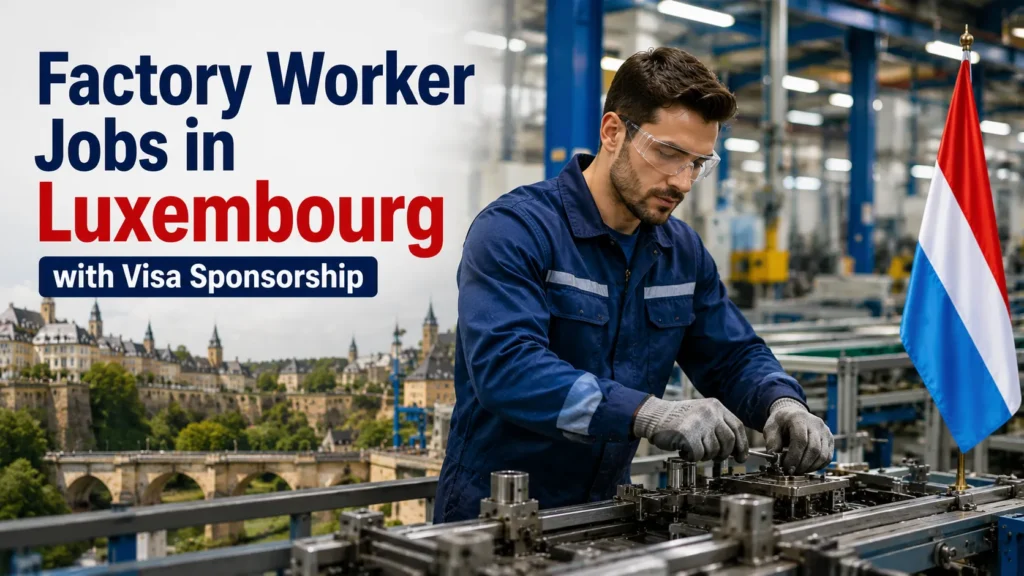
Luxembourg has a diverse industrial and manufacturing sector that includes food production, metalworking, machinery, packaging, logistics, chemicals, automotive-related activities, and industrial equipment. Factories and production companies need reliable workers to support manufacturing, assembly, packaging, quality checks, warehouse operations, and machine-related tasks.
Factory Worker Jobs in Luxembourg with Visa Sponsorship 2026 may interest international job seekers who have manufacturing experience, practical skills, or a willingness to work in a production environment. Positions can include factory workers, production operators, assembly workers, packaging workers, machine operators, production assistants, warehouse production workers, and manufacturing workers.
However, visa sponsorship is not guaranteed for every factory vacancy. Non-EU nationals generally need the appropriate authorisation to work and reside in Luxembourg. For salaried employment lasting more than three months, Luxembourg’s official process generally requires temporary authorisation to stay before entering the country, followed by the relevant residence permit after arrival. Employers may also need to complete recruitment procedures through ADEM before hiring a third-country national.
Job Overview
Factory workers support daily production and manufacturing activities. Their exact duties depend on the factory, products being manufactured, equipment used, and level of responsibility.
Job Title: Factory Worker / Production Worker / Manufacturing Worker / Production Operator / Assembly Worker
Country: Luxembourg
Job Type: Full-Time / Permanent / Contract, depending on the employer
Experience Required: Previous factory or production experience is beneficial, although some entry-level positions may provide training
Education Required: Requirements vary by employer; vocational training or technical education may be preferred for specialised positions
Visa Sponsorship: May be available for eligible international workers, depending on the employer, position, and immigration requirements
Work Locations: Luxembourg City and other industrial and manufacturing areas throughout Luxembourg
Salary: Varies according to experience, qualifications, employer, shift pattern, and responsibilities
Some employers may provide overtime, paid leave, training, employee benefits, and other workplace advantages.
Why Factory Workers Are Needed in Luxembourg
Manufacturing companies depend on workers who can keep production lines operating efficiently and safely. Factory employees may handle machinery, assemble products, prepare materials, inspect finished goods, package items, or move products between different areas of a facility.
Factories can operate on different schedules, and some production facilities work in shifts. This creates a need for employees who are dependable, punctual, physically capable, and comfortable working according to production schedules.
Candidates with experience operating machinery, working on production lines, using hand tools, or following manufacturing procedures may have an advantage when applying for relevant vacancies.
Also Check: Sales Representative Jobs in Luxembourg with Visa Sponsorship 2026
Types of Factory Worker Jobs Available
Production Worker
Production workers assist with manufacturing processes. They may prepare materials, operate basic equipment, assemble products, and monitor production activities.
Assembly Worker
Assembly workers put together components according to production instructions. Attention to detail is important because products must meet quality standards.
Machine Operator
Machine operators use manufacturing equipment to produce or process goods. Depending on the position, technical knowledge and previous machine experience may be required.
Packaging Worker
Packaging workers prepare finished products for storage, transportation, or sale. Their duties can include packing, labelling, weighing, and checking products.
Food Factory Worker
Food production facilities may employ workers to prepare, process, package, and inspect food products while following hygiene and safety requirements.
Warehouse and Production Worker
Some factories combine production and warehouse duties. Workers may move raw materials, organise finished products, load goods, and support inventory operations.
Job Responsibilities
Factory worker duties vary between employers. Common responsibilities may include:
- Preparing raw materials
- Operating production equipment
- Assembling products
- Packaging finished goods
- Labelling products
- Inspecting products for defects
- Following production instructions
- Measuring materials
- Loading and unloading goods
- Moving materials around the facility
- Cleaning workstations
- Maintaining basic equipment
- Recording production information
- Following workplace safety procedures
- Following quality-control requirements
- Meeting production targets
- Working with supervisors and other employees
Workers may also be required to report equipment problems, production issues, or safety concerns to supervisors.
Salary and Employee Benefits
Factory worker salaries in Luxembourg vary according to the industry, employer, experience, technical skills, shift pattern, and job responsibilities. An experienced machine operator may have different compensation from an entry-level production assistant.
Potential benefits may include:
- Regular salary
- Overtime pay where applicable
- Paid annual leave
- Shift allowances where applicable
- Professional training
- Safety equipment
- Health-related benefits
- Pension-related benefits
- Performance incentives
- Career development opportunities
Workers should confirm the exact salary, working hours, overtime rates, shift arrangements, accommodation, and benefits directly with the employer before accepting an offer.
Visa Sponsorship Process
Non-EU applicants should understand that a job advertisement mentioning international recruitment does not automatically guarantee visa sponsorship. The employer and worker must meet the applicable requirements.
For salaried employment lasting more than three months, Luxembourg’s official guidance states that a third-country national generally needs to obtain temporary authorisation to stay before entering Luxembourg. If the worker is subject to visa requirements, a Type D visa is then requested. After arrival, the worker must complete the declaration of arrival, medical check, and residence permit process.
The process may generally involve:
Step 1: Find a Factory Job
Search manufacturing companies, production businesses, food-processing facilities, industrial employers, recruitment agencies, and reputable Luxembourg employment platforms.
Step 2: Check the Employer
Confirm that the company is genuine and ask whether it accepts candidates from outside the European Union who require work and residence authorisation.
Step 3: Review the Vacancy
Check the job description for experience, shift requirements, physical demands, technical skills, language requirements, and other conditions.
Step 4: Prepare Your CV
Create a practical CV showing your previous factory experience, production duties, machinery experience, technical skills, and safety training.
Step 5: Submit Your Application
Apply through the employer’s official recruitment channel. Include certificates, references, and other documents if requested.
Step 6: Attend an Interview or Skills Assessment
Employers may ask about your production experience, machinery knowledge, safety awareness, teamwork, availability, and ability to work shifts.
Step 7: Receive an Employment Contract
If selected, review the employment contract carefully. It should clearly explain the job, salary, working schedule, location, and other conditions.
Step 8: Complete Immigration Procedures
The employer may need to declare the vacancy to ADEM. According to Luxembourg’s official guidance, if ADEM does not present a suitable candidate within three weeks, the employer may request a certificate allowing recruitment of a third-country national, subject to the applicable conditions.
Step 9: Relocate to Luxembourg
After the required authorisation has been approved, the worker can make travel and relocation arrangements according to the employment agreement.
Requirements for Factory Worker Jobs
Requirements vary by employer, but applicants may generally need:
- Previous factory experience
- Manufacturing experience
- Ability to follow instructions
- Physical fitness
- Good hand-eye coordination
- Attention to detail
- Reliability
- Teamwork skills
- Basic workplace safety knowledge
- Ability to work shifts
- Ability to stand for long periods
- Basic communication skills
- Valid passport
- Genuine employment offer
- Appropriate work authorisation
Technical positions may require additional vocational training or machinery-related qualifications.
Skills That Can Improve Your Chances
Candidates can strengthen their applications by highlighting experience with:
- Production lines
- Assembly
- Machine operation
- Packaging
- Quality control
- Inventory handling
- Warehouse operations
- Forklift operation
- Industrial equipment
- Hand tools
- Basic maintenance
- Manufacturing software
- Workplace safety
- Food production
- Metalworking
Knowledge of French, German, or Luxembourgish can be useful in some workplaces. English may also be helpful, particularly in international manufacturing environments.
Working Conditions
Factory workers generally work in production facilities, workshops, warehouses, food-processing plants, or industrial sites. The work can involve standing, walking, lifting materials, repetitive movements, and operating machinery.
Some factories operate around the clock, so employees may work morning, afternoon, night, or rotating shifts. Overtime may also be available depending on production requirements.
Safety is an important part of factory work. Employees may need protective clothing, safety footwear, gloves, hearing protection, helmets, or other equipment depending on the workplace.
Advantages of Working as a Factory Worker in Luxembourg
Factory employment can provide international work experience and help workers develop practical manufacturing skills.
Potential advantages include:
- International work experience
- Exposure to modern production systems
- Professional training
- Multicultural workplaces
- Opportunities to develop technical skills
- Potential overtime opportunities
- Career progression
- Experience with European workplace standards
Experienced workers may progress into senior production roles, machine operator positions, quality-control jobs, team leader positions, or production supervisor roles.
How to Apply
If you are interested in Factory Worker Jobs in Luxembourg with Visa Sponsorship 2026, follow these steps:
- Prepare an updated factory worker CV.
- Highlight manufacturing experience.
- Mention machinery and production skills.
- List safety certificates and technical training.
- Include previous employers and responsibilities.
- Add references where appropriate.
- Search reputable Luxembourg employers and recruitment platforms.
- Check whether the employer considers non-EU candidates.
- Confirm sponsorship and relocation arrangements.
- Apply through the official recruitment channel.
- Prepare for interviews or practical assessments.
- Review the employment contract carefully.
- Complete the required immigration procedures.
- Click Apply Now to get started
Applicants should be careful about recruitment scams. Avoid anyone promising a guaranteed factory job or visa in exchange for large upfront payments. Verify the employer, vacancy, contract, salary, working conditions, sponsorship arrangements, and immigration requirements before paying money or sharing sensitive documents.
Final Thoughts
Factory Worker Jobs in Luxembourg with Visa Sponsorship 2026 may provide opportunities for international workers with manufacturing experience, practical skills, reliability, and a strong understanding of workplace safety.
Production companies can offer different roles, from general factory work and packaging to machine operation, assembly, quality control, and specialised manufacturing. Candidates with technical experience and multiple practical skills may be able to target a wider range of positions.
For non-EU applicants, visa sponsorship should always be confirmed directly with the employer. It is not automatically included with every factory job. Luxembourg’s official immigration guidance requires third-country salaried workers to complete the relevant authorisation and residence procedures, while employers may have obligations involving ADEM before recruiting workers from outside the EU.
Before accepting an offer or making travel arrangements, verify the employer, employment contract, salary, shift schedule, benefits, sponsorship arrangements, and current immigration requirements through official Luxembourg sources.