
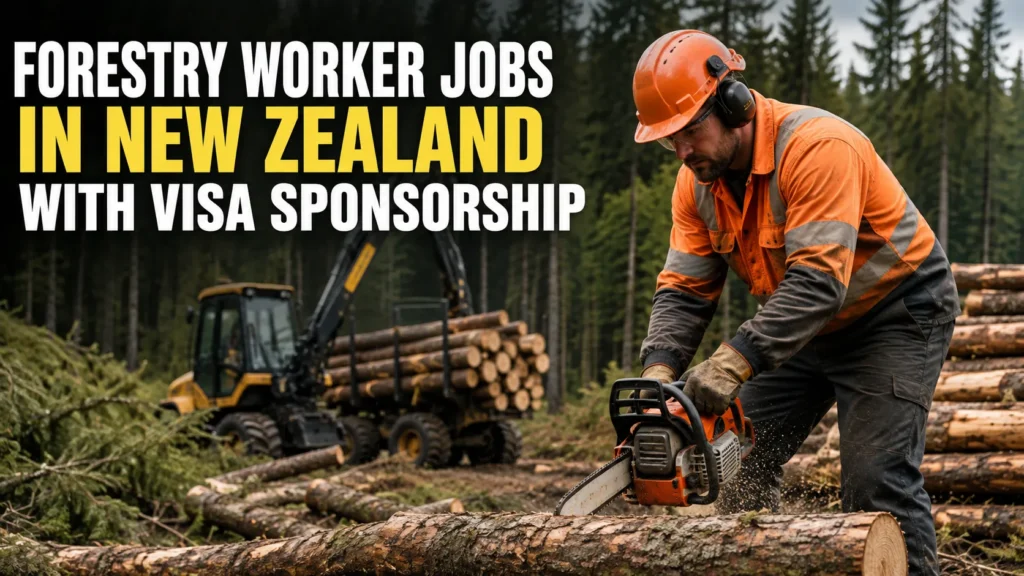
New Zealand has a well-established forestry and timber industry that provides employment opportunities in forest management, tree planting, harvesting, logging, silviculture, and timber production. Forestry workers support important activities involved in growing, maintaining, harvesting, and transporting trees. As a result, Forestry Worker Jobs in New Zealand with Visa Sponsorship 2026 may interest international workers with forestry, agriculture, outdoor, machinery, or general labour experience.
Forestry work can be physically demanding and is often performed outdoors in forests and rural areas. Depending on the position, workers may plant trees, clear vegetation, maintain forest areas, assist with harvesting operations, operate equipment, or prepare timber for transportation.
International applicants should understand that visa sponsorship is not automatically available for every forestry position. New Zealand employers hiring overseas workers must meet applicable immigration requirements, and workers need an appropriate visa before starting employment.
Job Overview
Forestry workers support the daily operations of forestry companies and contractors. Their duties depend on the type of forest operation and level of experience.
Job Title: Forestry Worker / Forest Worker / Forestry Labourer / Silviculture Worker / Logging Worker
Country: New Zealand
Job Type: Full-Time / Seasonal / Contract / Temporary, depending on the employer
Experience Required: Previous forestry, agricultural, outdoor, machinery, or physical labour experience may be beneficial
Education Required: Requirements vary depending on the position
Visa Sponsorship: May be available for selected eligible positions through an appropriate New Zealand work visa pathway
Work Locations: Waikato, Bay of Plenty, Northland, Gisborne, Hawke’s Bay, Canterbury, Otago, Southland, and other forestry regions
Salary: Varies according to experience, employer, location, job duties, working hours, and employment conditions
Why Forestry Workers Are Needed in New Zealand
Forestry is an important part of New Zealand’s primary industries. Forests require workers throughout different stages of their development, from planting and maintenance to harvesting and timber transportation.
Forestry companies and contractors may require additional workers during busy seasonal periods. Employment opportunities can also vary according to regional forestry activity and the type of work being performed.
Factors that may contribute to forestry employment opportunities include:
- Tree planting
- Forest maintenance
- Silviculture operations
- Tree harvesting
- Timber production
- Forest road maintenance
- Vegetation control
- Log processing
- Forest management
- Seasonal workforce requirements
Also Check: Hospitality Jobs in New Zealand with Visa Sponsorship 2026
Types of Forestry Jobs Available
International applicants may find different forestry positions depending on their skills and experience.
Forestry Labourer
Forestry labourers assist with general forest operations. Duties may include clearing vegetation, moving materials, maintaining work areas, and supporting experienced forestry workers.
Tree Planter
Tree planters plant seedlings across designated areas. The work requires physical fitness and the ability to work outdoors for extended periods.
Silviculture Worker
Silviculture workers help maintain and manage growing forests. Their duties can include vegetation control, pruning, thinning, and other forest maintenance activities.
Logging Worker
Logging workers assist with harvesting operations and may work around heavy machinery and timber processing equipment. Safety training is particularly important in these roles.
Forestry Machine Operator
Experienced workers may operate machinery used for harvesting, moving, processing, or transporting timber. Relevant experience and training may be required.
Job Responsibilities
Forestry worker responsibilities depend on the position and employer. Common duties may include:
- Planting trees
- Clearing vegetation
- Maintaining forest areas
- Pruning trees
- Thinning forest areas
- Moving timber and materials
- Assisting harvesting operations
- Loading and unloading materials
- Maintaining tools and equipment
- Operating machinery when qualified
- Following work instructions
- Inspecting work areas
- Maintaining safe work practices
- Using protective equipment
- Reporting hazards or equipment problems
- Working with supervisors and team members
Workers must follow strict safety procedures because forestry environments can involve steep terrain, heavy equipment, falling branches, vehicles, and changing weather conditions.
Salary and Employee Benefits
Forestry salaries in New Zealand vary according to the employer, job type, experience, location, qualifications, and working arrangement. Experienced machinery operators and specialized workers may earn more than entry-level forestry labourers.
Potential benefits may include:
- Competitive hourly wages
- Overtime payments where applicable
- Seasonal employment opportunities
- Paid leave for eligible employees
- Workplace training
- Safety equipment
- Accommodation assistance in selected positions
- Transportation support in selected jobs
- Career development opportunities
The exact pay rate, working hours, accommodation arrangements, and other benefits should always be confirmed through the official job advertisement and employment agreement.
Visa Sponsorship Process
Foreign workers interested in forestry employment need an appropriate New Zealand work visa. Depending on the job and employment arrangement, different work visa pathways may be available to eligible applicants.
The process may generally involve:
Step 1: Search for Suitable Jobs
Search for forestry vacancies through reputable job websites, recruitment companies, forestry contractors, and company career pages.
Step 2: Check the Employer
Confirm whether the employer is able to hire overseas workers through the applicable visa pathway.
Step 3: Prepare Your CV
Highlight forestry, farming, landscaping, construction, machinery, outdoor work, or other physically demanding experience.
Step 4: Attend an Interview
Employers may conduct telephone, online, or face-to-face interviews. Some positions may also require practical assessments.
Step 5: Receive a Job Offer
Successful candidates may receive an employment agreement explaining the position, pay, working hours, location, and employment period.
Step 6: Confirm Visa Eligibility
Check that the position, employer, experience, and other requirements meet the relevant visa conditions.
Step 7: Submit the Visa Application
Eligible workers can submit the required visa application and supporting documents.
Step 8: Begin Employment
After receiving the required authorization, workers can travel to New Zealand and begin employment according to their visa and employment agreement.
Immigration requirements can change, so applicants should check the latest rules before accepting a job offer.
Requirements for Forestry Worker Jobs
Requirements vary between employers, but candidates may generally need:
- Appropriate work authorization
- Physical fitness
- Ability to work outdoors
- Ability to follow safety instructions
- Reliability and punctuality
- Teamwork skills
- Basic communication abilities
- Ability to work in difficult terrain
- Willingness to work flexible hours
- Relevant forestry or outdoor work experience
Some machinery-related positions may require additional qualifications, licences, or previous equipment experience.
Skills That Improve Your Chances
Useful skills for forestry jobs may include:
- Tree planting
- Forest maintenance
- Machinery operation
- Landscaping
- Agricultural work
- Physical fitness
- Workplace safety
- Equipment handling
- Teamwork
- Time management
- Problem-solving
- Outdoor work experience
Previous experience in forestry, farming, construction, landscaping, or other outdoor industries can strengthen an application.
Working Conditions
Forestry workers generally work outdoors in forests and rural areas. The job can involve walking long distances, climbing uneven terrain, lifting materials, bending, and performing repetitive physical tasks.
Workers may experience rain, wind, cold temperatures, heat, mud, and uneven ground. Some jobs also involve heavy machinery and vehicles. Appropriate protective equipment and safety procedures are essential.
Seasonal forestry jobs may involve longer or flexible working periods depending on weather, production schedules, and operational requirements.
Advantages of Working as a Forestry Worker in New Zealand
Working in New Zealand’s forestry sector may provide several potential benefits for eligible workers.
These may include:
- Seasonal employment opportunities
- Outdoor work experience
- International employment experience
- Development of practical skills
- Forestry and machinery training
- Opportunities in regional areas
- Potential career progression
- Experience in a major primary industry
With experience and additional training, workers may progress into machinery operation, forestry supervision, harvesting, silviculture, or other specialized roles.
How to Apply
If you are interested in Forestry Worker Jobs in New Zealand with Visa Sponsorship 2026, follow these steps:
- Prepare an updated CV highlighting your forestry or outdoor work experience.
- Include machinery, farming, construction, landscaping, or physical labour experience.
- Gather relevant certificates and employment references.
- Search for current vacancies through reputable job platforms and forestry companies.
- Check whether the employer accepts overseas workers.
- Confirm whether the position is eligible for the relevant visa pathway.
- Submit your application through the official recruitment channel.
- Attend an interview or practical assessment if shortlisted.
- Carefully review the employment agreement if selected.
- Complete the required immigration procedures.
- Begin work after receiving the necessary authorization.
- Click Apply Now to get started
Applicants should be careful about recruitment scams. Verify the employer, job offer, salary, visa arrangements, accommodation claims, and employment agreement before paying money or providing sensitive personal information.
Final Thoughts
Forestry Worker Jobs in New Zealand with Visa Sponsorship 2026 may provide opportunities for international workers interested in tree planting, silviculture, forest maintenance, logging, harvesting, and other outdoor forestry activities. The sector offers both seasonal and longer-term employment opportunities depending on the employer, occupation, and immigration pathway.
However, visa sponsorship is not guaranteed for every forestry vacancy. Applicants should verify the employer, job offer, employment conditions, experience requirements, and appropriate visa pathway before making travel arrangements.
With relevant experience, physical fitness, safety awareness, and the correct work authorization, eligible workers can gain valuable international experience and develop their careers in New Zealand’s forestry industry.