
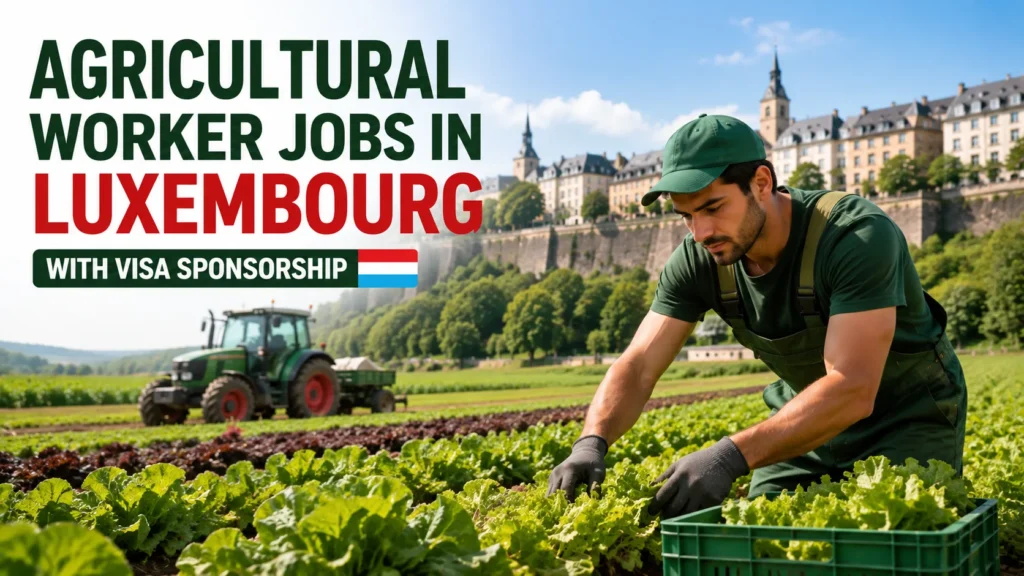
Luxembourg has a diverse agricultural sector that includes crop production, livestock farming, fruit growing, horticulture, and viticulture. Farms and agricultural businesses require workers for planting, harvesting, animal care, field maintenance, greenhouse work, and other daily tasks.
Agricultural Worker Jobs in Luxembourg with Visa Sponsorship 2026 may interest workers from outside the European Union who are looking for employment in farming and related industries. Available positions can include farm workers, fruit pickers, vineyard workers, greenhouse workers, livestock workers, agricultural labourers, and horticultural workers.
Luxembourg’s agriculture sector continues to receive government attention in 2026. The Ministry of Agriculture has published a 2026 guide specifically covering seasonal workers in wine growing, fruit growing, horticulture, and agriculture.
However, visa sponsorship is not guaranteed for every agricultural vacancy. Non-EU workers must meet the applicable employment and immigration requirements, and employers must follow the correct recruitment procedures.
Job Overview
Agricultural workers perform practical tasks that help farms and agricultural businesses maintain crops, animals, equipment, and farmland.
Job Title: Agricultural Worker / Farm Worker / Farm Labourer / Fruit Picker / Vineyard Worker / Greenhouse Worker
Country: Luxembourg
Job Type: Full-Time / Seasonal / Temporary / Permanent, depending on the employer
Experience Required: Previous farming or agricultural experience may be beneficial, although some entry-level positions may provide training
Education Required: Formal education is not always required for general farm labour positions
Visa Sponsorship: May be available for eligible international workers, depending on the employer, position, and immigration requirements
Work Locations: Rural areas and agricultural regions throughout Luxembourg
Salary: Varies according to experience, job type, employer, working hours, and employment contract
Some employers may provide training, protective equipment, paid leave, accommodation, or other benefits depending on the position.
Why Agricultural Workers Are Needed in Luxembourg
Agricultural businesses need workers throughout the year, although demand can increase significantly during planting and harvesting periods. Fruit and vegetable production, vineyards, horticulture, and livestock farming can all require additional labour.
Luxembourg’s Ministry of Agriculture published a dedicated 2026 guide for employing seasonal workers in wine growing, fruit growing, horticulture, and agriculture. This confirms that seasonal employment is an established part of the sector.
The country’s agricultural strategy also recognises challenges related to the availability of farm labour. Luxembourg’s national agricultural plan notes changes in the agricultural workforce and an ageing farming population, with a significant proportion of farmers approaching or reaching retirement age.
Applicants should remember that agricultural labour demand can change according to the season, crop, weather conditions, and individual farm requirements.
Types of Agricultural Jobs Available
Farm Worker
Farm workers assist with general agricultural activities such as planting, harvesting, field maintenance, feeding animals, and cleaning work areas.
Fruit Picker
Fruit pickers collect ripe fruit and prepare it for sorting, packing, storage, or transportation. The work can become particularly busy during harvest seasons.
Vineyard Worker
Vineyard workers help maintain grapevines and may perform pruning, planting, harvesting, and general vineyard maintenance.
Greenhouse Worker
Greenhouse workers help grow vegetables, plants, flowers, and other crops. Duties may include planting, watering, pruning, harvesting, and preparing products for sale.
Livestock Worker
Livestock workers care for farm animals by providing feed and water, cleaning animal areas, monitoring animals, and assisting with general farm duties.
Horticultural Worker
Horticultural workers may work with vegetables, flowers, plants, nurseries, and other cultivated products. The job can include planting, maintenance, harvesting, and packaging.
Also Check: Elderly Care Assistant Jobs in Luxembourg with Visa Sponsorship 2026
Job Responsibilities
Agricultural worker responsibilities depend on the farm and type of position. Common duties may include:
- Planting crops
- Harvesting vegetables and fruit
- Picking grapes
- Watering plants
- Removing weeds
- Pruning plants
- Preparing soil
- Feeding livestock
- Cleaning animal areas
- Sorting agricultural products
- Packing produce
- Loading and unloading goods
- Operating basic farm equipment
- Maintaining fields
- Following health and safety procedures
Some experienced workers may also operate tractors, harvesting machinery, irrigation systems, or other agricultural equipment.
Salary and Employee Benefits
Agricultural worker salaries in Luxembourg vary according to the position, experience, employer, working hours, and whether the job is seasonal or permanent.
Potential benefits may include:
- Regular salary
- Paid annual leave where applicable
- Overtime payments where applicable
- Workplace training
- Protective equipment
- Accommodation in selected positions
- Transportation assistance in some jobs
- Social security benefits
- Career development opportunities
Applicants should confirm the exact salary, working hours, accommodation arrangements, deductions, and benefits in the employment contract.
Luxembourg’s agricultural sector is subject to social and employment standards. The Ministry of Agriculture states that agricultural support is linked to compliance with basic employment, health, and workplace safety standards.
Visa Sponsorship Process
Non-EU citizens generally need appropriate authorisation to work and reside in Luxembourg. ADEM states that third-country nationals who wish to live and work in Luxembourg generally need a residence permit obtained before arrival, followed by a residence card after arrival.
For seasonal agricultural work, Luxembourg has a specific immigration route. Third-country nationals intending to stay for more than three months for seasonal employment must follow a two-step procedure.
A general process may include:
Step 1: Find an Agricultural Job
Search for vacancies through farms, agricultural businesses, vineyards, horticultural companies, recruitment agencies, and reputable job platforms.
Step 2: Check the Employer
Confirm that the farm or company is genuine and determine whether it accepts applications from workers outside the European Union.
Step 3: Check the Job Type
Determine whether the position is seasonal, temporary, or permanent and check the applicable work-authorisation requirements.
Step 4: Prepare Your CV
Create a simple CV showing your agricultural experience, previous farm work, machinery skills, and physical work experience.
Step 5: Attend an Interview
Employers may conduct telephone or online interviews and ask about previous farm work, availability, physical duties, equipment, and agricultural experience.
Step 6: Receive an Employment Contract
If selected, the employer may provide an employment contract and complete the relevant recruitment procedures.
Step 7: Complete Immigration Procedures
The applicant must complete the applicable work and residence authorisation process before starting employment.
Step 8: Travel to Luxembourg
Once the required authorisation has been granted, the worker can arrange travel and begin work according to the employment contract.
Requirements for Agricultural Worker Jobs
Requirements vary between employers, but applicants may generally need:
- Valid passport
- Relevant farm experience where required
- Physical ability to perform manual work
- Ability to work outdoors
- Ability to follow instructions
- Basic agricultural knowledge
- Reliability and punctuality
- Teamwork skills
- Willingness to work flexible hours
- Ability to follow safety procedures
- Appropriate work authorisation
Some jobs may require experience operating tractors or other agricultural machinery.
Skills That Improve Your Chances
Agricultural workers can strengthen their applications by highlighting:
- Crop planting
- Harvesting
- Fruit picking
- Vineyard work
- Greenhouse work
- Livestock care
- Irrigation
- Pruning
- Soil preparation
- Farm equipment
- Produce sorting
- Packing
- Animal feeding
- Workplace safety
- Physical stamina
Language skills can also be useful. Depending on the employer, French, German, Luxembourgish, or English may be preferred.
Working Conditions
Agricultural work can be physically demanding. Workers may spend long periods outdoors, stand for extended periods, bend repeatedly, carry produce, and work in changing weather conditions.
Harvest work can require early mornings, long working days, weekends, or flexible schedules. Greenhouse and livestock positions may also have different working hours depending on the farm’s operations.
Workers should receive appropriate instructions and safety information. Luxembourg’s agricultural social-conditionality rules cover employment conditions, working time, safety, protective equipment, training, and workplace accident procedures.
Advantages of Working in Agriculture in Luxembourg
Working as an agricultural worker in Luxembourg may provide several potential advantages:
- International work experience
- Experience with European farming practices
- Seasonal employment opportunities
- Practical agricultural training
- Opportunities in horticulture and viticulture
- Potential long-term employment
- Development of machinery and farm skills
- Experience in modern agricultural operations
Workers with additional experience may progress into senior farm worker, machinery operator, farm supervisor, greenhouse supervisor, or other agricultural positions.
How to Apply
If you are interested in Agricultural Worker Jobs in Luxembourg with Visa Sponsorship 2026, follow these steps:
- Prepare an updated agricultural worker CV.
- Mention your previous farm experience.
- List the crops, animals, or agricultural activities you have worked with.
- Include machinery or equipment experience.
- Highlight your physical work and safety skills.
- Search reputable Luxembourg farms and agricultural employers.
- Check whether the employer accepts non-EU applicants.
- Confirm whether work-authorisation support is available.
- Check whether the position is seasonal or permanent.
- Submit your application through the official recruitment channel.
- Prepare for an interview.
- Review the employment contract carefully.
- Complete the required immigration procedures.
- Travel only after receiving the necessary authorization.
- Click Apply Now to get started
Be careful with recruitment scams. Avoid anyone promising a guaranteed agricultural job or visa in exchange for large upfront payments. Verify the employer, job offer, salary, accommodation, contract, and immigration arrangements before making payments or travel plans.
Final Thoughts
Agricultural Worker Jobs in Luxembourg with Visa Sponsorship 2026 may provide opportunities for workers interested in farming, horticulture, vineyards, fruit production, greenhouses, and livestock. Luxembourg’s Ministry of Agriculture has specifically published 2026 guidance for seasonal workers in agriculture, wine growing, fruit growing, and horticulture.
The best candidates are likely to be reliable workers who can handle physical tasks, work outdoors, follow instructions, and demonstrate relevant agricultural experience. Experience with farm machinery or specialised agricultural activities can provide an additional advantage.
Visa sponsorship is not automatic. Seasonal and other agricultural workers from outside the EU must follow the applicable immigration process, and the employer must meet its recruitment obligations.
Before travelling to Luxembourg, carefully verify the employer, employment contract, salary, working hours, accommodation arrangements if offered, job duties, and required work and residence authorisation.
2 thoughts on “Agricultural Worker Jobs in Luxembourg with Visa Sponsorship 2026”